 Thistle & Seam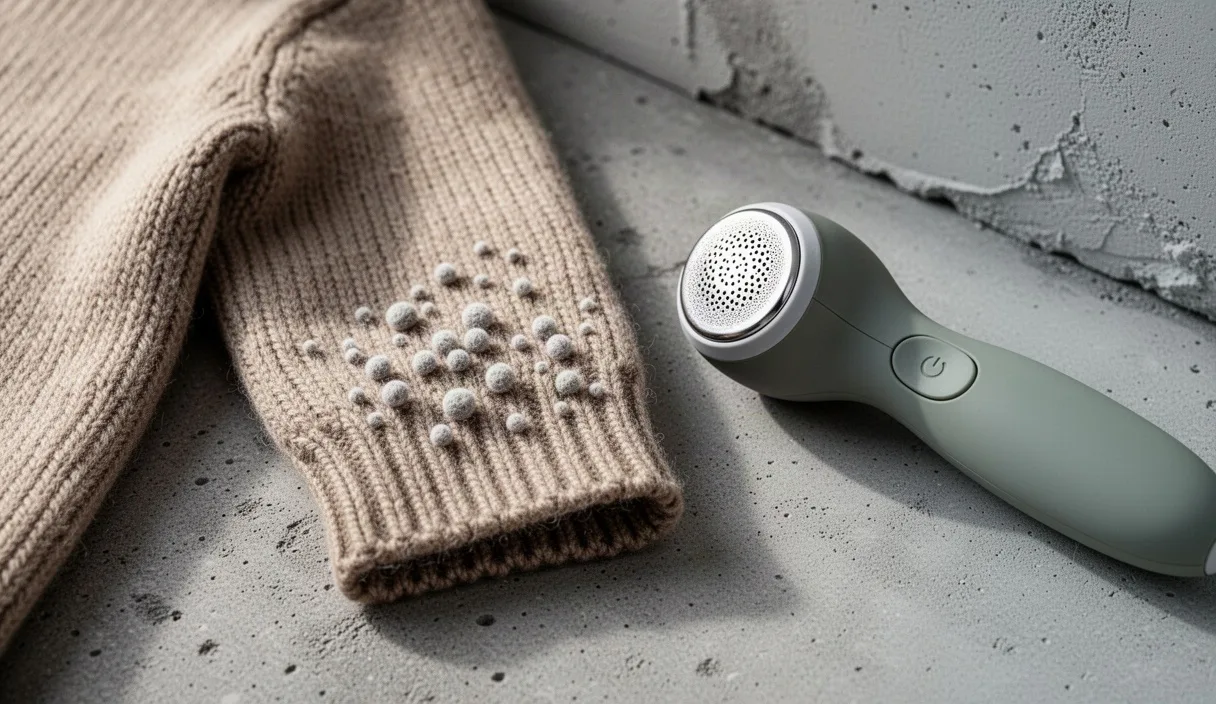

Run your hand across the front of a favorite sweater after a few wears and you will likely feel small, rough bumps clustered where your arms brush your sides or where a bag strap rests on your shoulder. Those bumps are pills, and they are not a sign that the sweater is falling apart. They are a sign that the fibers on the surface are doing exactly what loose fibers do when they rub against something else repeatedly: they tangle.
The good news is that pilling is almost always fixable, and fixing it does not require replacing the garment or resigning yourself to a fuzzy, worn-out look. What it does require is understanding why pills form in the first place, because that knowledge decides whether you reach for a fifty-cent razor, a battery-powered fabric shaver, or a pumice-like sweater stone, and it tells you how hard you can press before you start cutting into the weave itself instead of just the loose fuzz sitting on top of it.
What Pilling Is and Why It Forms
Every woven or knitted fabric is made of individual fibers that are spun into yarn, then knitted or woven into cloth. Not every fiber in that yarn is perfectly secured. Shorter fibers, especially, tend to work their way loose over time as the fabric flexes and rubs against skin, other clothing, furniture, or a seatbelt. Once a fiber end is free, it does not just fall away. Friction causes it to tangle with its neighbors, and that tangle rolls into a small ball, the pill.
Think of it the way you would think of hair in a brush. A single loose hair is easy to pull free, but a cluster of loose hairs wound around each other becomes a knot that takes real effort to remove. Pills are the fabric equivalent of that knot, anchored to the garment by a few fibers that are still attached to the main yarn structure.
Friction is the main driver, which is why pilling concentrates in predictable spots: underarms, sleeve cuffs, the lower back where a coat rubs, and anywhere a bag or seatbelt crosses the body. Washing machines add friction too, especially when a sweater tumbles against zippers, buttons, or rougher fabrics in the same load. The more often a fabric moves against something, the more loose fibers it exposes, and the faster pills form.
Which Fabrics Pill More and Why
Not all fibers pill at the same rate, and the difference comes down to fiber length and strength. Long, strong fibers resist pulling loose. Short, weak fibers do not.
Synthetic fibers like acrylic and polyester are usually cut to a uniform length during manufacturing, and that length is often shorter than you would find in high-quality natural fibers. Shorter fibers escape the yarn more easily, which is why a budget acrylic sweater can start pilling after two or three wears while a tightly spun wool one takes months.
Natural fibers vary by source and by how they are processed:
- Merino wool has relatively long, fine fibers and tends to pill less than coarser wool, though cheap merino blends with synthetic filler can still pill at the underarms.
- Cashmere is naturally short-fibered and soft, which is exactly why it pills so readily. The softness that makes cashmere desirable is the same property that makes it fragile on the surface.
- Cotton knits pill less than wool blends in general, but loosely knitted cotton sweaters, like chunky cardigans, can pill at friction points just the same.
- Blended yarns, such as a wool-acrylic mix, often pill more than either fiber alone, because the two materials shed at different rates and loosen each other's grip in the yarn.
Knit structure matters as much as fiber type. A tight, dense knit holds fibers in place better than a loose, airy one, which is why a fine-gauge merino sweater often outlasts a chunky, loosely spun one even when both are technically wool.
Tools Compared: Fabric Shaver, Razor and Sweater Stone
Three tools handle most pilling jobs, and each suits a different fabric weight and pilling severity. Choosing the wrong one is the fastest way to leave thin patches or small holes in a sweater you were trying to save.
| Tool | Best For | Risk Level | Notes |
|---|---|---|---|
| Battery fabric shaver | Sturdy knits: cotton, heavier wool, acrylic | Moderate | Adjustable depth settings reduce risk on thinner fabric |
| Disposable razor | Flat, tightly woven sweaters | High on knits | Fast but easy to snag loose knit loops |
| Sweater stone (pumice-style) | Delicate fibers: cashmere, fine merino | Low to moderate | Works by light abrasion, needs a gentle hand |
A battery-operated fabric shaver works like a tiny lawnmower: a rotating blade behind a protective mesh grid trims pills without cutting into the base fabric, as long as the mesh sits flat against the surface. Most come with two or three depth settings, and starting on the shallowest setting is the safer approach on any fabric you have not tested before.
A disposable razor can remove pills in a pinch, and it works well on tightly woven fabric where there is little risk of the blade catching a loop of yarn. On knitted sweaters, though, a razor has no guard, so it can just as easily slice through a strand of yarn as it can shave a pill, which is why most people reserve razors for flat-weave items like wool trousers rather than knits. A sweater stone, often made of a fine pumice-like material, removes pills through light abrasion rather than cutting. It is gentler than a blade, which makes it the better choice for cashmere and other soft, short-fibered knits where a shaver's blade guard might still press too hard.
A Step-by-Step Method to Remove Pills Safely
Regardless of which tool you choose, the process itself follows the same logic: work in small sections, keep the fabric flat and taut, and stop the moment you feel resistance instead of a smooth glide.
- Lay the sweater flat on a table rather than holding it up in the air. A flat, supported surface keeps the fabric from stretching while you work, which matters because stretched fabric is thinner and easier to damage.
- Smooth out one section at a time, about the size of your hand, so you can see every pill before you touch it with a tool.
- Test on an inconspicuous spot first, such as the inside hem or a cuff, running the shaver or stone over it for three or four seconds to see how the fabric reacts.
- Use short, light strokes in one direction rather than scrubbing back and forth. Scrubbing is what tends to wear a thin patch into the fabric.
- Check the mesh guard or stone surface every minute or so and clear away collected fuzz, since a clogged tool presses harder on the fabric to do the same job.
- Shake out the sweater after finishing a section to remove loose fibers before moving to the next area, which also lets you see your progress clearly.
- Finish with a lint roller or tape wrapped around your hand to pick up any remaining loose fuzz the tool didn't fully remove.
The whole process for an average sweater takes between ten and twenty minutes, depending on how heavily it has pilled. Rushing through it with firm pressure is the single biggest reason people end up with thin spots instead of a smooth finish.
Preventing Pilling Before It Starts
Since pilling is driven by friction, reducing friction is the most direct form of prevention. Turning sweaters inside out before washing keeps the friction of the wash cycle against the inside surface rather than the side everyone sees.
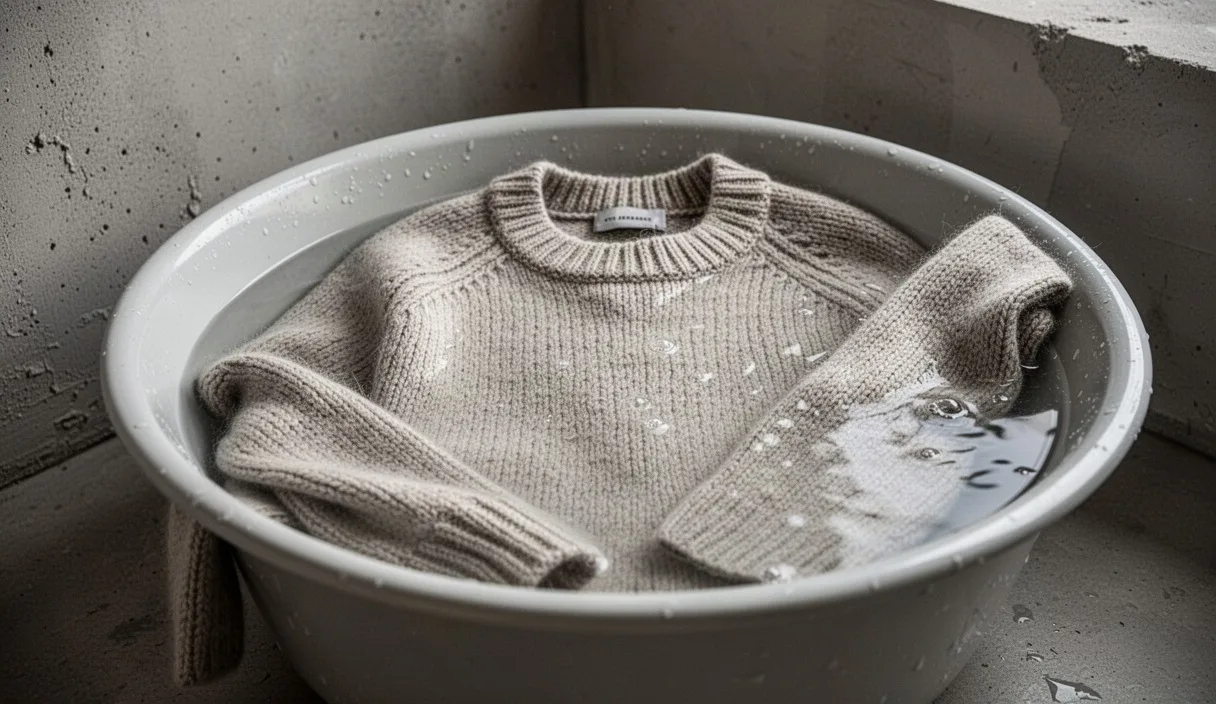
A mesh laundry bag adds another layer of protection by keeping the sweater from rubbing directly against zippers, buttons, or rougher fabrics in the same load. Washing on a gentle or hand-wash cycle, with cold water and a mild detergent, also reduces the agitation that loosens fibers in the first place.
Beyond laundry habits, a few wearing choices make a measurable difference:
- Rotate sweaters instead of wearing the same one two or three days in a row, giving fibers time to settle between wears.
- Be mindful of bag straps and seatbelts, since repeated pressure in the same spot accelerates pilling there specifically.
- Air-dry flat rather than using a tumble dryer, since dryer tumbling is one of the highest-friction environments a sweater regularly experiences.
None of these steps eliminate pilling entirely, since some fiber loosening is a natural result of simply wearing and washing clothing. They do slow it down meaningfully, often stretching the time between pill removal sessions from weeks to months.
When Heavy Pilling Means It's Time to Retire the Garment
Light to moderate pilling is almost always a maintenance issue, not a sign of a failing garment. But there is a point past which repeated pill removal starts doing more harm than good.
If a sweater has been shaved or stoned several times already and pills are returning within a day or two of wear, that usually means the yarn itself has thinned to the point where fewer fibers are left to hold the structure together. At that stage, continuing to shave the surface risks creating actual holes rather than just removing fuzz.
A simple check is to hold the fabric up to a light source. If you can see noticeably more light through the pilled areas than through the rest of the sweater, the yarn has thinned unevenly, and no amount of careful shaving will restore it. At that point, the garment is better suited to low-friction uses, like loungewear at home, or it may simply be time to let it go.
Common Mistakes
Most pilling damage comes from a handful of avoidable habits rather than bad luck:
- Pressing too hard with a razor, which can slice through a knit loop instead of just the loose pill sitting on top of it.
- Using a fabric shaver on its deepest setting on a delicate fiber like cashmere, where a shallow setting would have done the job just as well with far less risk.
- Working on a stretched or hanging garment instead of a flat, supported surface, which thins the fabric temporarily and makes it easier to damage.
- Skipping the test patch on an unfamiliar fabric blend, since some blends react very differently to abrasion than pure wool or pure cotton would.
Next Steps
Start with the gentlest tool that matches your fabric: a sweater stone for cashmere and fine merino, a fabric shaver on its lowest setting for sturdier wool and cotton knits, and a razor only for flat-woven pieces. Test on an inside seam first, work in small sections, and stop the moment you feel the tool catching rather than gliding.
Pair pill removal with the prevention habits above, washing inside out in a mesh bag, air-drying flat, and rotating which sweaters you wear, so the next cleanup takes less effort than the last one. And if a sweater has been shaved repeatedly and still pills within a day of wear, treat that as useful information rather than a failure on your part: the yarn has simply reached the end of what grooming can fix, and a textile or garment-care professional can confirm whether repair or retirement is the better next move for that specific piece.