 Thistle & Seam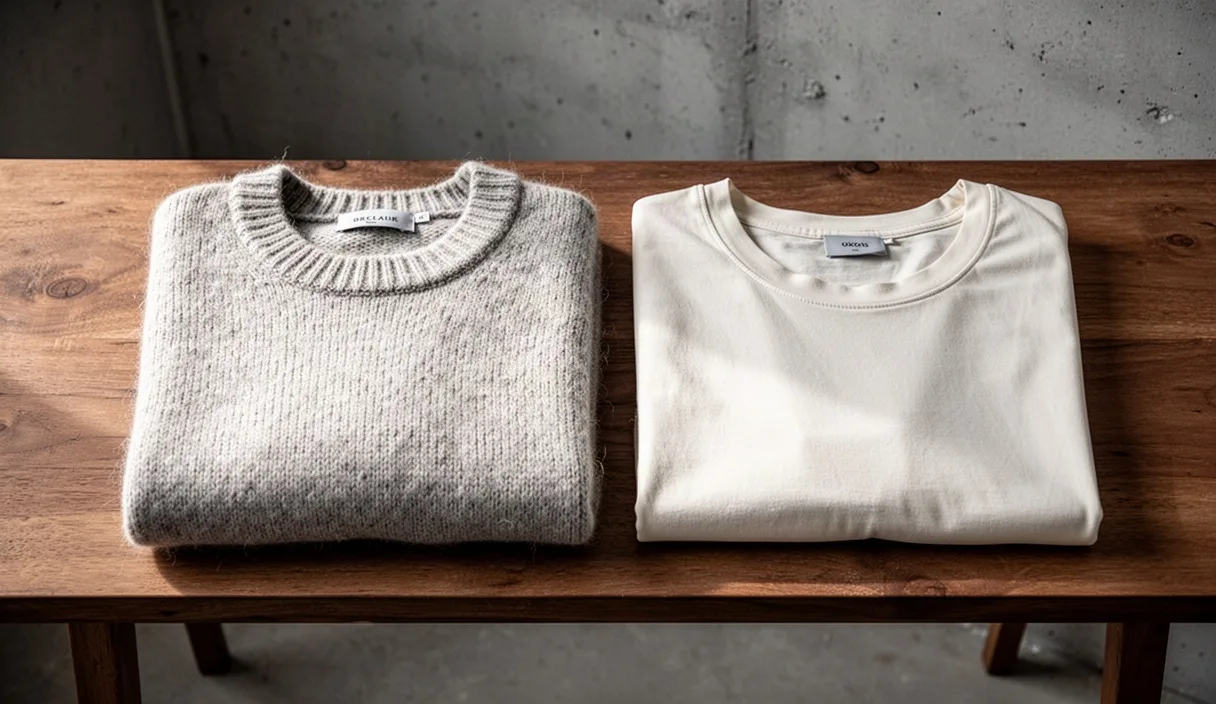

Pick up a wool sweater and a cotton sweater of the same thickness, and the wool one almost always feels warmer the moment you put it on. This isn't a trick of marketing or a matter of taste. It comes down to how each fiber is built at a microscopic level, and how that structure handles air and moisture once it's touching your skin.
Understanding why requires looking past the fabric's surface and into the fiber itself. Warmth, in clothing terms, isn't really about the material being "hot." It's about how well that material slows down the natural flow of heat away from your body. Once you see how wool and cotton behave differently in that job, the choice between them stops being a guess and starts being a calculation.
What Warmth Actually Measures in Fabric
When people say a fabric is "warm," they usually mean it has good thermal insulation, which is just a measure of how slowly heat passes through it. Your body is constantly producing heat, and that heat wants to move toward anything colder, which in most rooms and most weather is the air around you. A fabric's job is to get in the way of that heat transfer, not to generate warmth on its own.
Think of it like a thermos bottle. A thermos doesn't make your coffee hotter. It just slows down how fast the coffee loses heat to the surrounding air. Clothing works the same way: it traps a layer of warmed air close to your skin and resists letting that heat escape into the colder air outside.
The key variable here is trapped air, not the fiber itself. Still air is a poor conductor of heat, which means heat has a hard time moving through it. Fabrics that hold more still air in small pockets will insulate better than fabrics that lie flat and let air move freely across the skin. This is why two garments of identical thickness can perform very differently: thickness only tells you how much space the fabric occupies, not how much of that space is actually trapped air versus densely packed fiber.
How Wool Fibers Trap Air Like a Thermos
Wool fiber has a natural crimp, a wave-like bend that occurs because of the way the protein keratin forms inside the fiber as it grows. A single wool fiber isn't straight like a strand of cotton; it coils and bends along its length, sometimes with twenty or more crimps per inch depending on the breed of sheep. Merino wool, for example, tends to have a tighter, more frequent crimp than coarser wools like Romney.
This crimp matters because it keeps individual fibers from lying flat against each other. When wool fibers are spun into yarn and woven or knitted into fabric, the crimp holds the fibers apart just enough to create thousands of tiny air pockets throughout the material. It's similar to how a coiled spring takes up more space than a straight wire of the same length. That extra space is where the insulating air lives.
Wool fiber also has a rougher, scaled surface (visible under a microscope as overlapping plates, similar to roof shingles) which adds friction between fibers. This friction helps the fabric hold its loft, meaning it resists compressing flat under the weight of normal wear or the pressure of another layer on top. A wool sweater you've worn all day still has much of its air-trapping structure intact by evening, which is part of why it keeps performing.
Here's a quick way to picture the mechanism:
- Crimped fibers create space instead of lying flat, like crumpled paper versus a flat sheet.
- Scaled fiber surfaces grip each other and resist flattening under pressure.
- The trapped air between fibers resists heat movement, acting as the actual insulating layer.
Why Cotton Flattens and Loses Heat Faster
Cotton fiber grows as a relatively straight, flat ribbon-like strand, without the coiled crimp found in wool. Under a microscope, a cotton fiber looks more like a twisted ribbon than a spring. This means cotton fibers naturally want to lie close together and flat, which reduces the number and size of air pockets within the fabric.
When cotton fabric is compressed, whether by body weight, a tight waistband, or the pressure of another garment, it tends to stay compressed. Unlike wool's springy crimp, cotton doesn't rebound to its original loft once pressure is removed. A cotton sweater that's been sat in or slept in will often feel noticeably thinner and less insulating afterward, because the air pockets that were there originally have been squeezed out and don't fully return.
This is also why cotton fabrics are often described as feeling "cool" or "crisp" even when dry. The tighter fiber packing allows more direct contact between the fabric's surface and your skin, which gives heat an easier, more direct path to escape. That's actually useful in warm weather, which is part of why cotton t-shirts are a summer staple, but it works against cotton when the goal is retaining body heat in cold conditions.
The Role of Moisture in Perceived Warmth
Moisture changes the warmth equation significantly, and this is where the difference between wool and cotton becomes even more pronounced. Cotton is highly absorbent, it can hold onto roughly a quarter to a third of its own weight in water before it even feels wet to the touch, and once damp, it stays damp for a long time because the flat fiber structure doesn't wick moisture away from the skin efficiently.
Wet cotton is a poor insulator because water conducts heat roughly twenty-five times faster than still air. Once cotton fibers are saturated, the air pockets that normally provide insulation get filled with water instead, and heat moves through that water almost as fast as it would move through bare skin exposed to cold air. This is why cotton has a long-standing reputation among hikers and outdoor workers as a material to avoid in cold, wet conditions.
Wool behaves very differently because of its chemical structure. Wool fiber can absorb a substantial amount of moisture internally, often reported as up to a third of its dry weight, without that moisture feeling wet on the surface. The moisture gets absorbed into the fiber's core rather than sitting on the surface between fibers, so the air pockets responsible for insulation stay largely intact even when the wool has taken on noticeable water content.
There's an added detail worth knowing: as wool absorbs moisture, it releases a small amount of heat through a chemical process called heat of sorption. This isn't a large effect, and it shouldn't be mistaken for wool "generating warmth," but it does mean wool tends to feel warmer immediately after getting slightly damp (from sweat, for example) rather than feeling colder, which is the opposite of cotton's typical behavior.
Comparing Wool and Cotton Side by Side
Looking at both fibers next to each other makes the practical differences easier to track, especially when choosing fabric for a specific use case rather than general wardrobe preference.
| Property | Wool | Cotton |
|---|---|---|
| Fiber shape | Crimped, coil-like | Flat, ribbon-like |
| Loft retention after compression | Rebounds well | Stays flattened |
| Moisture absorption | Up to about a third of dry weight, held internally | Up to about a third of dry weight, held on surface |
| Insulation when wet | Retains most insulating ability | Loses most insulating ability |
| Drying time | Slower | Faster |
| Feel against skin | Warmer, sometimes itchier | Cooler, generally softer |
Drying time is worth a second look, since it seems like a drawback for wool but isn't always one in practice. Wool dries more slowly than cotton because the moisture is held deep in the fiber rather than sitting on the surface, but that same trait is why wool keeps insulating while damp, whereas cotton dries faster partly because it's shedding surface water that was already undermining its warmth.
When to Choose Each Fiber for Your Wardrobe
Wool makes the most sense in cold, variable, or damp conditions, which is why it shows up so often in hiking socks, winter coats, and base layers meant for outdoor work. If you sweat during activity and then stop moving (a common pattern during winter hikes with rest breaks), wool's ability to stay insulating while damp becomes a practical safety feature, not just a comfort detail. Anyone planning extended cold-weather outdoor exposure should also consider layering systems and, for serious conditions, consult outdoor safety guidance from a knowledgeable outfitter rather than relying on fabric choice alone.
Cotton is the better pick for warm climates, low-intensity indoor wear, and situations where breathability matters more than heat retention, like summer shirts, bedsheets, or everyday loungewear. It's also generally easier to care for and more budget-friendly at similar quality tiers, which matters for everyday basics worn and washed frequently.
For transitional seasons or mixed-use garments, wool-cotton blends are worth considering, since they can offer some of wool's loft and moisture handling alongside cotton's softness and lower cost. A blend such as 70 percent wool to 30 percent cotton is common in sweaters aiming for a middle ground, though exact performance will depend on the specific weave or knit construction, not just fiber ratio.
Common Mistakes
One frequent mistake is assuming thickness alone determines warmth, which leads people to buy a bulky cotton sweater expecting wool-level insulation and then feeling cold despite the garment's size. Thickness matters, but fiber structure determines how much of that thickness is actually trapped air.
Another common error is wearing cotton as a base layer during high-sweat winter activity, such as skiing or cold-weather running, then being surprised when a rest stop leaves them chilled. The issue isn't the outer layers, it's that the damp cotton against the skin is actively pulling heat away during the pause.
People also sometimes avoid wool entirely due to itchiness from a single bad experience, without realizing that fiber diameter varies enormously between wool types. Coarse wool can feel scratchy, while fine merino wool, with a much smaller fiber diameter, often feels soft enough for direct skin contact.
Next Steps
If you're building or adjusting a cold-weather wardrobe, start by checking the fiber content tag on anything meant for active or damp conditions, and prioritize wool or wool blends for base layers and socks specifically. For everyday indoor wear or warm-climate basics, cotton remains a practical, breathable, and affordable choice. When in doubt for serious outdoor or occupational cold exposure, it's worth consulting a specialty outdoor retailer or occupational safety resource, since fabric choice is one factor among several in managing cold-weather risk.